A novel target. Two powerful platforms.
Egeiro’s approach centres on the amylin receptor — a novel gateway to Alzheimer’s pathology.
- the scientific approach
Targeting the amylin receptor
Although substantial effort has been invested in developing drugs for Alzheimer’s Disease, relatively limited progress has been made towards disease-modifying therapies that halt or reverse disease progression.
Dr. Jhamandas designed a novel strategy targeting the amylin receptor, which serves as a portal for the expression of the deleterious effects of ß-amyloid protein — a key pathological hallmark of AD.
Blocking this receptor inhibits the neurotoxic and neuroinflammatory effects of ß-amyloid, preventing the downstream clinical development of dementia.
- Our Technology
Two platforms one mission
Peptide Platform
We are developing highly specific, brain-permeable and stable peptides that recognize and block a subtype of the amylin receptor in the brain.
We have confirmed this hypothesis by treating AD mice with a peptide that blocks the amylin receptor, resulting in improved spatial memory, learning, and a reduction in β-amyloid burden and neuroinflammation.
We are currently optimizing this peptide to enhance its stability and blood-brain barrier permeability.
Explore Platform →

Small Molecule Platform
We computationally modelled the amylin receptor and leveraged peptide data to determine its binding site, then conducted a large-scale screening of over seven million compounds.
Compounds identified through this in silico screen were synthesized and tested over multiple iterative cycles, showing specific prevention of amylin receptor activation.
These optimized compounds have shown protection from β-amyloid and amylin-mediated neurotoxicity, and in vivo efficacy in mouse models of Alzheimer's disease.
Explore Platform →
- Our Platforms
Two therapeutic approaches
Peptide Platform
We are developing highly specific, brain-permeable and stable peptides that recognize and block a subtype of the amylin receptor in the brain.
We have confirmed this hypothesis by treating AD mice with a peptide that blocks the amylin receptor, resulting in improved spatial memory, learning, and a reduction in ß-amyloid burden and neuroinflammation.
We are currently optimizing this peptide to enhance its stability and blood-brain barrier permeability.
- Our Platforms
Two therapeutic approaches
Small Molecule Platform
We computationally modelled the amylin receptor and leveraged peptide data to determine its binding site, then conducted a large-scale screening of over seven million compounds.
Compounds identified through this in silico screen were synthesized and tested over multiple iterative cycles, showing specific prevention of amylin receptor activation.
These optimized compounds have shown protection from ß-amyloid and amylin-mediated neurotoxicity, and in vivo efficacy in mouse models of AD.
- Peptides
- Small Molecule Drug
Peptide Platform
We are developing highly specific, brain-permeable and stable peptides that recognize and block a subtype of the amylin receptor in the brain.
We have confirmed this hypothesis by treating AD mice with a peptide that blocks the amylin receptor, resulting in improved spatial memory, learning, and a reduction in ß-amyloid burden and neuroinflammation.
We are currently optimizing this peptide to enhance its stability and blood-brain barrier permeability.
Small Molecule Platform
We computationally modelled the amylin receptor and leveraged peptide data to determine its binding site, then conducted a large-scale screening of over seven million compounds.
Compounds identified through this in silico screen were synthesized and tested over multiple iterative cycles, showing specific prevention of amylin receptor activation.
These optimized compounds have shown protection from ß-amyloid and amylin-mediated neurotoxicity, and in vivo efficacy in mouse models of AD.
- Research Imaging
Visualizing pathology & treatment response
The quest to treat Alzheimer’s: Hope from Research
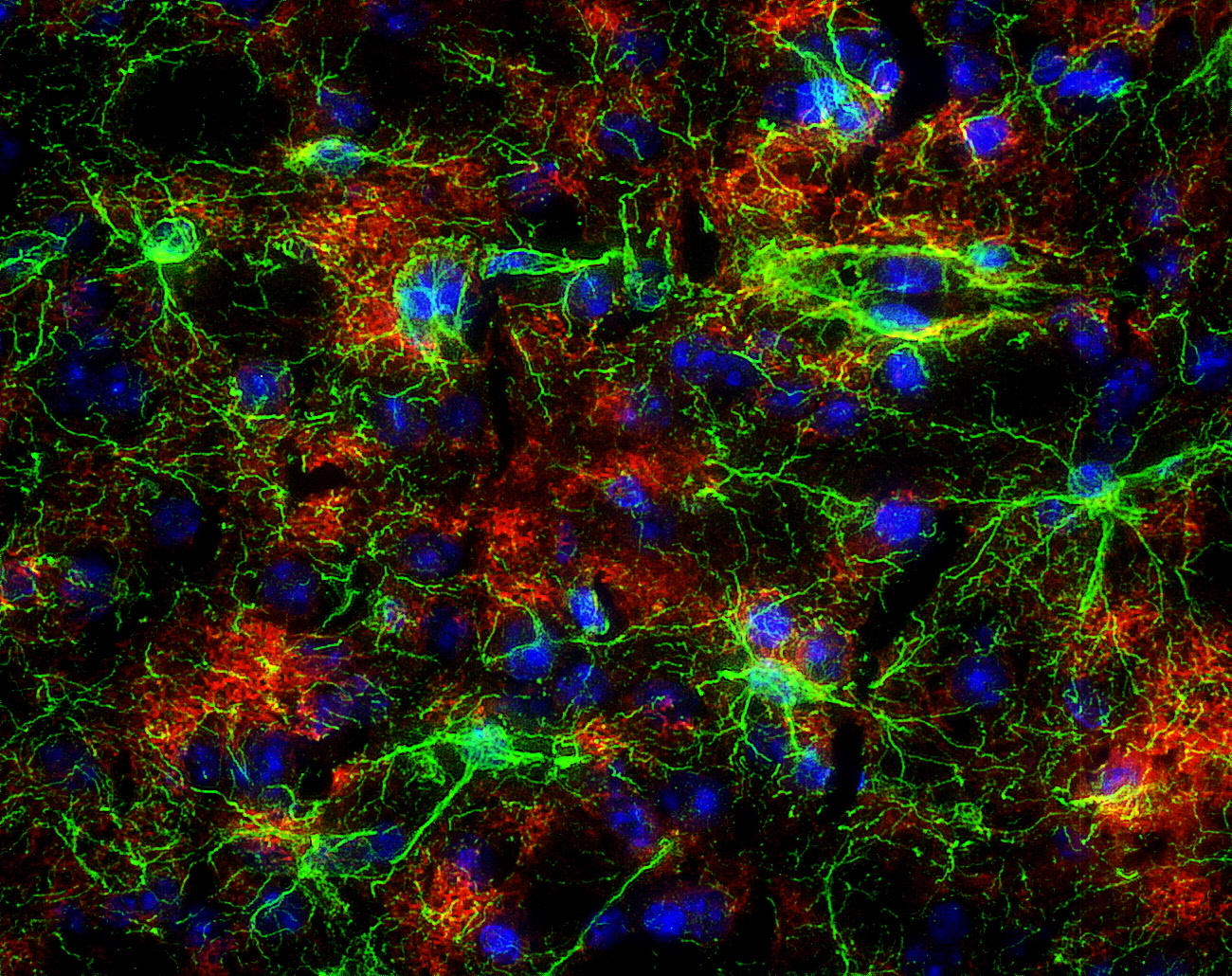
Jhamandas Laboratory — Microscopy image
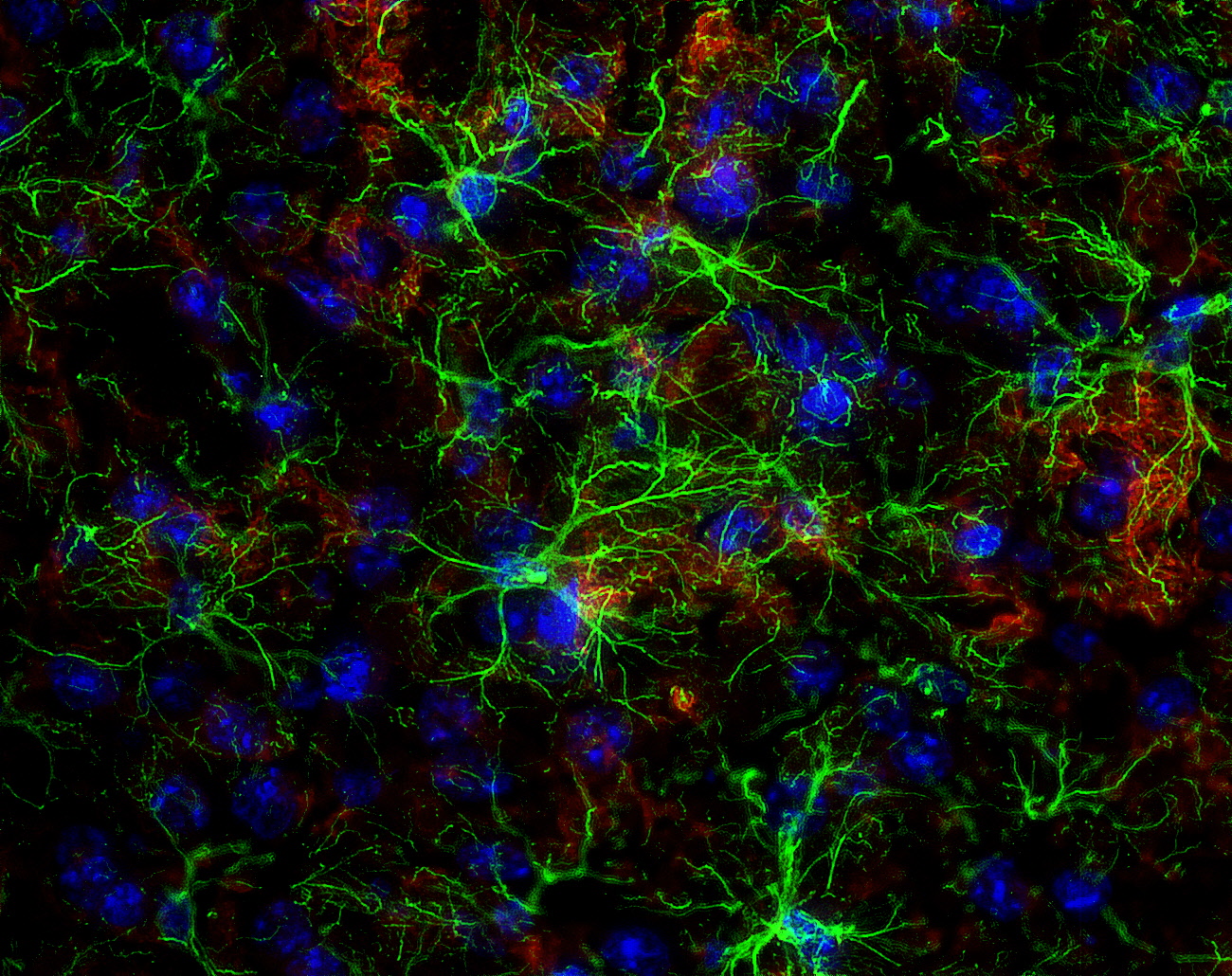
These microscopy images showcase the healing potential of our experimental treatments for Alzheimer’s disease. In the left panel, a close look at the brain of a mouse with Alzhimer’s reveals the fuzzy structure of amyloid plaques (shown in red) and the morphology of surrounding cells (in green), indicating inflammatory changes. The right panel shows partial improvement of the pathology following administration of an experimental treatment, which also leads to improved learning and memory in these mice.